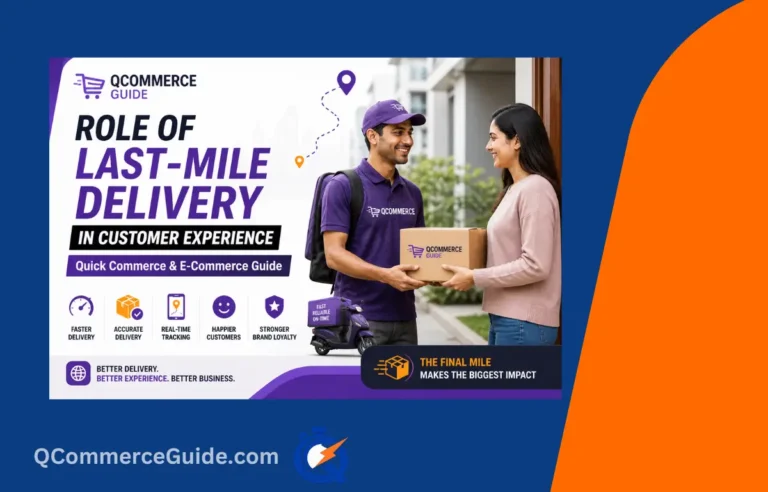
Why Last-Mile Delivery Defines Customer Experience
In today’s on-demand economy, customers don’t judge your brand by your product—they judge it by how fast, how accurately, and how smoothly it reaches them.
This is where last-mile delivery becomes the most critical factor in customer experience.
Whether it’s a 10-minute grocery order or a next-day e-commerce delivery, the final step—from warehouse to doorstep—is where:
- Expectations are either exceeded
- Or completely broken
Having worked in retail and last-mile operations since 2013, I can confidently say:
Most customer complaints originate in the last mile—not in sourcing, pricing, or even packaging.
What is Last-Mile Delivery?
Last-mile delivery refers to the final step of the delivery process, where goods are transported from;
- Distribution center
- Dark store
- Fulfillment hub
→ directly to the customer’s doorstep.
In quick commerce, this window is compressed to 10–30 minutes, making execution even more challenging.
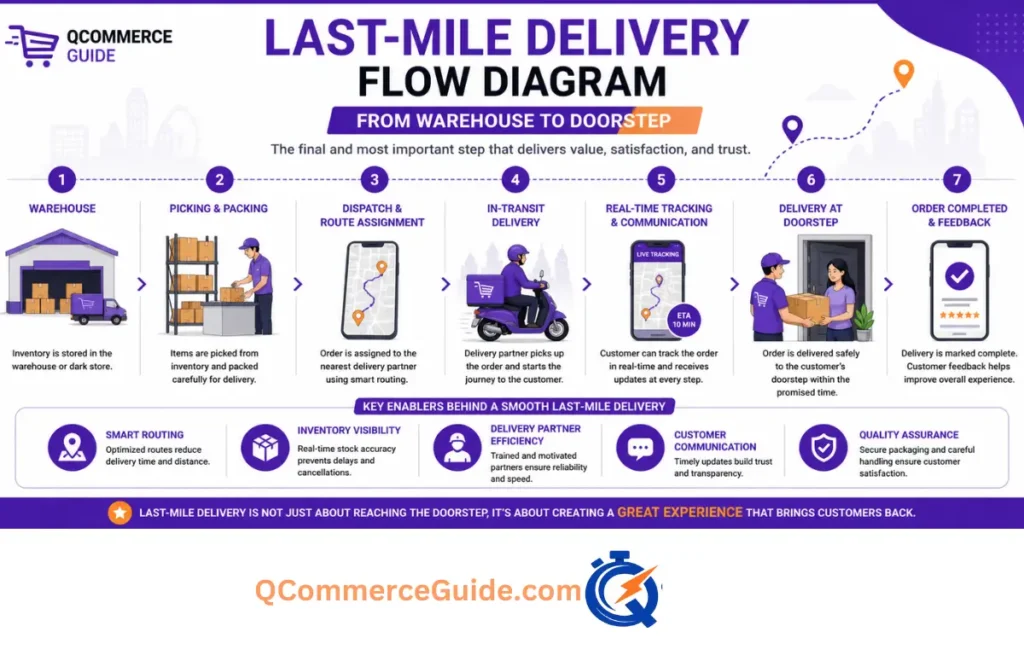
Why Last-Mile Delivery is Critical for Customer Experience
1. It’s the Only Physical Touchpoint
Customers don’t see:
- Your warehouse
- Your systems
- Your supply chain
They only experience:
- Delivery time
- Rider behavior
- Packaging condition
👉 This makes last-mile delivery the face of your brand
2. Speed Directly Impacts Satisfaction
Modern customers expect:
- Instant fulfillment
- Real-time tracking
- Predictable delivery windows
Even a delay of 10–15 minutes can lead to:
- Order cancellations
- Negative reviews
- Reduced repeat purchases
3. Accuracy Builds Trust
Wrong or missing items are one of the biggest pain points.
From operational experience:
- 1 incorrect order can cost 5–10 future orders
- Customers remember bad experiences more than good ones
4. Delivery Experience Shapes Brand Perception
A polite, professional delivery partner can:
- Improve brand perception
- Increase tips and ratings
- Encourage repeat usage
Whereas:
- Rude behavior
- Poor handling
- Late arrivals
→ instantly damage trust
Key Elements of Last-Mile Delivery That Affect Customer Experience
1. Delivery Speed
- Quick commerce: 10–15 minutes
- Standard e-commerce: Same-day / next-day
Reality: Speed must be balanced with accuracy.
2. Delivery Accuracy
- Correct items
- Proper quantities
- No damaged goods
Accuracy is often more important than speed.
3. Real-Time Tracking
Customers expect:
- Live order tracking
- Accurate ETA
- Notifications
Lack of visibility leads to frustration.
4. Delivery Partner Behavior
- Communication
- Professionalism
- Basic courtesy
This is often overlooked but highly impactful.
5. Packaging Quality
- Leak-proof
- Damage-resistant
- Organized
Bad packaging can ruin even a fast delivery.
Practical Insights from Industry Experience
1. Last-Mile is the Most Expensive Part of Delivery
In most operations:
- Last-mile accounts for 40–60% of total logistics cost
Why?
- Fuel
- Rider wages
- Time inefficiencies
- Failed deliveries
2. Speed vs Cost is a Constant Trade-Off
Faster delivery requires:
- More dark stores
- More riders
- Smaller delivery radius
This increases cost significantly.
3. Rider Availability is the Biggest Bottleneck
Even with perfect systems:
- Rider shortages during peak hours
- Weather conditions
- Traffic congestion
→ can disrupt delivery timelines
4. Address Accuracy Matters More Than You Think
Common issues:
- Incorrect pin codes
- Missing landmarks
- Unreachable customers
This leads to:
- Delays
- Failed deliveries
- Increased costs
5. Order Batching Impacts Experience
To optimize cost:
- Companies bundle multiple orders
But this can:
- Delay individual deliveries
- Reduce customer satisfaction
Balancing batching vs speed is critical.
Real-World Scenarios
Scenario 1: Late Delivery in Quick Commerce
A 10-minute delivery arrives in 25 minutes.
Customer reaction:
- Feels misled
- Loses trust
- May switch apps
Scenario 2: Wrong Item Delivered
Even if delivery is fast:
- Wrong product = poor experience
Customer values accuracy over speed.
Scenario 3: Excellent Delivery Partner
- Calls before arrival
- Polite interaction
- Quick handover
Result:
- Positive rating
- Brand loyalty
Scenario 4: Poor Packaging
- Spilled groceries
- Damaged items
Result:
- Refund requests
- Negative reviews
Challenges in Last-Mile Delivery
Operational Challenges
- Traffic unpredictability
- High delivery density
- Rider retention
Cost Challenges
- Rising fuel costs
- Low delivery margins
- High infrastructure investment
Customer Expectations
- Faster delivery
- Free delivery
- Perfect accuracy
These expectations are often unrealistic at scale.
How Companies Improve Last-Mile Delivery
1. Dark Store Expansion
- Reduces delivery distance
- Improves speed
2. Route Optimization Algorithms
- Smart delivery routing
- Reduced delays
3. Demand Forecasting
- Stocking high-demand items
- Reducing stock-outs
4. Rider Incentive Programs
- Peak hour bonuses
- Performance-based rewards
5. Technology Integration
- Real-time tracking
- Automated dispatch systems
Actionable Tips for Businesses
If you’re running or planning a delivery-based business:
Focus on:
- Accuracy first, speed second
- Training delivery partners
- Clear communication systems
Invest in:
- Location intelligence
- Inventory visibility
- Customer support
Avoid:
- Overpromising delivery times
- Ignoring customer feedback
- Poor packaging standards
Future of Last-Mile Delivery
The next phase will focus on:
- AI-driven logistics
- Hyperlocal warehouses
- Electric delivery vehicles
- Drone deliveries (long-term)
But one thing will remain constant:
👉 Customer experience will always depend on last-mile execution
My Experience; During my Tenure is Swiggy Instamart i use to extract raw data of all calling. I found that Store team not picking call of Customer care executive & the First Time resolution process not followed increased complaints for a new launched store.
Solution; We have provided training for all the store team & reduced the complaints drastically.
FAQ: Last-Mile Delivery & Customer Experience
1. Why is last-mile delivery so important?
Because it’s the final interaction between the brand and the customer, directly impacting satisfaction.
2. What is the biggest challenge in last-mile delivery?
Rider availability and traffic unpredictability are the biggest operational challenges.
3. Is faster delivery always better?
Not necessarily. Accuracy and reliability are equally important.
4. How can companies improve last-mile delivery?
By optimizing routes, improving inventory systems, and training delivery partners.
5. What percentage of cost is last-mile delivery?
Typically 40–60% of total logistics cost.
Conclusion: The Real Impact of Last-Mile Delivery
The role of last-mile delivery in customer experience cannot be overstated.
From my years in retail and logistics, the biggest takeaway is simple:
- Customers don’t remember your backend systems
- They remember how their order arrived
In the end:
- Fast delivery builds excitement
- Accurate delivery builds trust
- Great delivery experience builds loyalty
Businesses that master last-mile delivery will win the future of commerce.
1 thought on “Role of Last-Mile Delivery in Customer Experience (Quick Commerce & E-Commerce Guide)”