The rapid rise of quick commerce has completely changed how consumers buy groceries and daily essentials. Customers now expect deliveries within 10–20 minutes, making operational efficiency more important than ever. At the center of this transformation lies one critical function: Inventory Management in Quick Commerce.
Having worked in retail, grocery retail, e-commerce, and last-mile delivery operations since 2013, I have seen how inventory systems directly influence profitability, customer retention, and operational stability.
As per my experience, inventory management is the backbone of successful quick commerce operations because even minor execution gaps can disrupt the entire delivery chain.
What Is Inventory Management in Quick Commerce?
Inventory Management in Quick Commerce refers to the process of tracking, replenishing, organizing, and optimizing stock across dark stores or fulfillment centers to support ultra-fast deliveries.
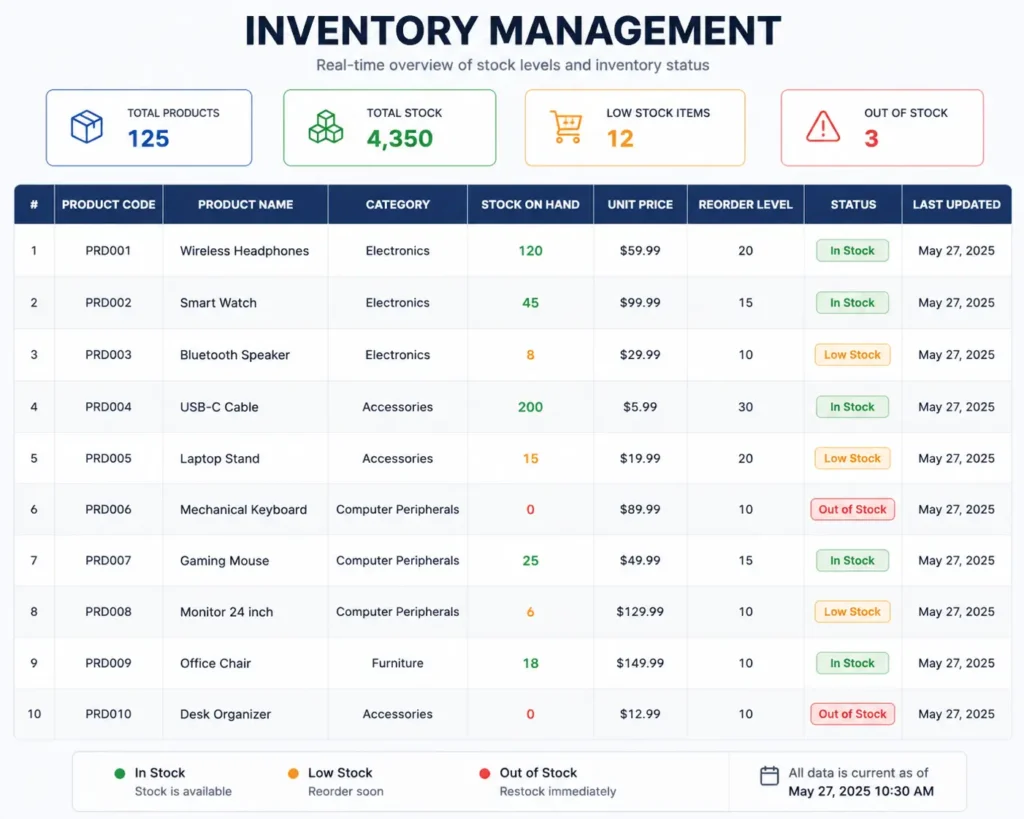
The objective is simple:
- Maintain product availability
- Reduce stock-outs
- Minimize wastage
- Improve picking speed
- Optimize storage space
- Ensure accurate real-time inventory visibility
However, executing this successfully is extremely complex because quick commerce operates under intense time pressure.
Why Inventory Management in Quick Commerce Is Different
Traditional retail stores focus on customer browsing and shelf presentation. Quick commerce dark stores focus entirely on operational efficiency.
Key Differences Between Traditional Retail and Quick Commerce
| Factor | Traditional Retail | Quick Commerce |
|---|---|---|
| Delivery Speed | Same day or later | 10–20 minutes |
| Inventory Updates | Periodic | Real-time |
| Store Type | Customer-facing | Dark stores |
| Picking Process | Manual shopping | Optimized picking |
| SKU Movement | Moderate | Extremely fast |
| Demand Variation | Predictable | Highly dynamic |
Because of these differences, Inventory Management in Quick Commerce requires advanced forecasting, operational discipline, and rapid execution.
During my tenure in retail and grocery operations, I observed that traditional inventory systems often fail in quick commerce because they are not designed for minute-level order processing and rapid stock movement.
How Inventory Management Works in Quick Commerce
Quick commerce inventory systems involve multiple interconnected operational layers.
1. Dark Store Inventory Management
Dark stores are small fulfillment hubs located near residential areas.
Their inventory model focuses on:
- Fast-moving products
- Daily essentials
- High-demand SKUs
- Optimized shelf placement
Products are organized for speed rather than customer browsing.
2. Real-Time Stock Tracking
Modern quick commerce platforms rely on:
- Barcode scanning
- Inventory management software
- Picker apps
- Live stock synchronization
- Automated replenishment alerts
This ensures the app displays accurate product availability.
3. Demand Forecasting
Forecasting plays a critical role in:
- Preventing stock-outs
- Reducing excess inventory
- Managing perishables
- Improving order fulfillment rates
Demand forecasting uses:
- Historical sales
- Weather trends
- Festival demand
- Weekend spikes
- Local buying patterns
4. Replenishment Planning
Inventory replenishment is continuous in quick commerce.
Fast-moving products like:
- Milk
- Bread
- Soft drinks
- Snacks
- Ice cream
may require multiple replenishment cycles daily.
In my career, I have seen replenishment delays become one of the biggest reasons for stock-outs during peak evening demand windows.
Major Challenges in Inventory Management in Quick Commerce
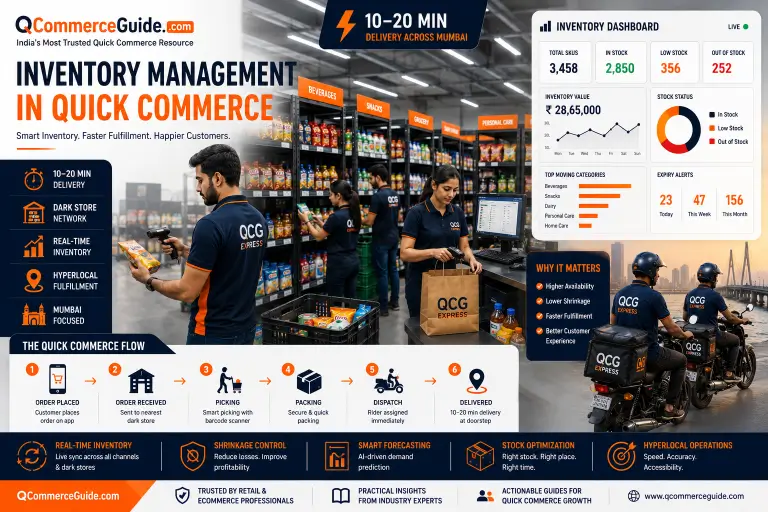
Managing inventory in a high-speed delivery ecosystem is operationally demanding.
High SKU Movement
Quick commerce stores experience rapid inventory turnover.
A popular SKU can move from fully stocked to out-of-stock within hours during peak demand.
Limited Storage Capacity
Dark stores are compact compared to supermarkets.
This creates pressure to:
- Optimize shelf space
- Prioritize profitable SKUs
- Avoid overstocking
Demand Volatility
Demand changes rapidly based on:
- Weather
- Festivals
- Cricket matches
- Salary days
- Local events
Unexpected spikes can disrupt inventory planning.
Shrinkage Control
Shrinkage remains one of the biggest operational concerns in quick commerce.
Common Causes of Shrinkage
- Damaged goods
- Expired inventory
- Pilferage
- Picking errors
- Inventory misplacement
Poor shrinkage control directly impacts profitability.
As per my experience, shrinkage increases significantly during festival periods and high-pressure operational hours when process discipline weakens.
Fresh Inventory Management
Perishable products create additional challenges:
- Shelf-life monitoring
- Temperature management
- Spoilage control
- Fast stock rotation
Fresh categories often generate the highest wastage.
Importance of Stock Management in Quick Commerce
Effective Stock Management improves both operational performance and customer experience.
Benefits of Strong Stock Management
Higher Product Availability
Customers are more likely to reorder when products remain consistently available.
Faster Order Fulfillment
Well-organized inventory reduces picking time.
Lower Inventory Losses
Efficient stock rotation minimizes expiry-related losses.
Better Working Capital Utilization
Optimized inventory reduces unnecessary holding costs.
Improved Customer Satisfaction
Fewer cancellations improve trust and retention.
Inventory Management Strategies Used in Quick Commerce
Leading quick commerce companies rely on several operational strategies to improve inventory performance.
Inventory Management in Quick Commerce: Core Strategies
SKU Rationalization
Not every product deserves shelf space.
Quick commerce companies continuously analyze:
- Product movement
- Profit margins
- Order frequency
- Customer demand
Slow-moving products are often removed.
During my tenure managing grocery operations, SKU rationalization helped improve storage efficiency and reduced dead stock significantly.
ABC Inventory Classification
Products are grouped based on sales importance.
| Category | Description |
|---|---|
| A | High-value, fast-moving items |
| B | Medium-demand products |
| C | Slow-moving inventory |
This helps prioritize replenishment.
Micro-Market Forecasting
Demand varies by location.
For example:
- Premium residential areas may demand imported products
- Student areas may see higher instant food sales
- Family zones may prioritize household essentials
Localized forecasting improves inventory efficiency.
Dynamic Replenishment
Instead of fixed replenishment schedules, quick commerce operations use:
- Real-time sales monitoring
- Automated stock alerts
- Demand-triggered replenishment
This reduces stock-outs significantly.
Optimized Shelf Layouts
Dark store layouts are designed for:
- Faster picker movement
- Reduced congestion
- Better SKU visibility
Frequently ordered items are placed closer to packing stations.
In my career, I have seen dark store productivity improve noticeably simply by redesigning shelf layouts and repositioning high-frequency SKUs.
Role of Technology in Inventory Management in Quick Commerce
Technology is the backbone of modern inventory operations.
Inventory Management Software
Advanced systems help track:
- Stock movement
- Inventory aging
- Reorder levels
- Real-time availability
AI-Based Forecasting
Machine learning models improve:
- Demand prediction
- Seasonal planning
- Product recommendations
Barcode and RFID Tracking
These systems improve:
- Inventory accuracy
- Picking efficiency
- Audit management
Analytics Dashboards
Operations teams monitor:
- Fill rate
- Stock-outs
- Inventory aging
- Shrinkage trends
- Picker productivity
Real-time visibility improves decision-making.
As per my experience, technology only delivers results when operational teams consistently follow scanning and inventory handling processes.
Practical Insights from Industry Experience
Over the past 15+ years in retail and quick commerce operations, I have observed that inventory problems are usually operational rather than technological.
1. Inventory Accuracy Depends on Store Discipline
Even advanced software cannot compensate for:
- Improper stock placement
- Delayed inward processing
- Unscanned inventory movement
- Careless replenishment practices
Execution quality matters more than tools.
2. Shrinkage Control Requires Continuous Monitoring
Shrinkage often increases during:
- Peak order periods
- Staff shortages
- Festival demand spikes
Regular audits and accountability systems are essential.
During my tenure, stores with stronger audit routines consistently performed better in shrinkage control.
3. Fast-Moving Categories Need Dedicated Monitoring
Products like dairy, beverages, and snacks require near real-time supervision.
Without frequent replenishment checks:
- Shelves empty quickly
- Orders get canceled
- Customer trust declines
4. Dark Store Layouts Have Major Productivity Impact
I have seen dark stores improve picking efficiency significantly simply by reorganizing shelf locations.
Poor layouts increase:
- Picker travel time
- Packing delays
- Operational fatigue
5. Fresh Inventory Is the Hardest Category to Manage
Balancing freshness and wastage is extremely challenging.
Overstocking increases spoilage.
Understocking causes lost sales.
The right balance comes from continuous demand analysis and disciplined stock rotation.
In my career, fresh inventory categories have consistently required the highest operational attention compared to packaged goods.
Best Practices for Inventory Management in Quick Commerce
Maintain Accurate Real-Time Inventory
Inventory updates must happen instantly after:
- Picking
- Returns
- Damage
- Replenishment
Reduce SKU Complexity
Too many low-demand SKUs increase operational pressure.
Focus on:
- High-demand products
- Better inventory turns
- Faster replenishment
Improve Shrinkage Control Systems
Implement:
- Daily audits
- Barcode scanning discipline
- Damage reporting systems
- CCTV monitoring
Strengthen Demand Forecasting
Forecasting should combine:
- Historical sales
- Real-time trends
- Weather patterns
- Event-based demand
Optimize Replenishment Frequency
Fast-moving categories may require multiple replenishments daily.
As per my experience, businesses that review replenishment data multiple times daily usually maintain better fill rates and lower cancellation percentages.
Future of Inventory Management in Quick Commerce
The future of quick commerce inventory operations will likely include:
AI-Powered Inventory Automation
Automated systems will predict demand more accurately.
Smarter Dark Stores
Dark stores will become more data-driven and layout-optimized.
Predictive Replenishment
Systems will automatically trigger stock movement before shortages occur.
Advanced Shrinkage Analytics
Real-time monitoring tools will improve shrinkage control.
Hyperlocal Inventory Planning
Inventory will become increasingly neighborhood-specific.
FAQ: Inventory Management in Quick Commerce
What is inventory management in quick commerce?
It refers to real-time stock tracking, replenishment, and optimization in dark stores to support ultra-fast deliveries.
Why is inventory management important in quick commerce?
Accurate inventory improves product availability, reduces stock-outs, and ensures faster order fulfillment.
What is shrinkage control in inventory management?
Shrinkage control involves reducing inventory losses caused by damage, theft, expiry, or operational errors.
How do quick commerce companies manage stock efficiently?
They use:
- Real-time tracking
- Demand forecasting
- Dynamic replenishment
- Optimized dark store layouts
What are the biggest inventory challenges in quick commerce?
Major challenges include:
- Demand volatility
- Limited storage
- Shrinkage
- Fresh inventory wastage
- Stock accuracy
Conclusion
As quick commerce continues expanding across India, operational excellence will become the key differentiator between successful and struggling businesses. Among all operational functions, Inventory Management in Quick Commerce remains the most critical.
Fast delivery promises mean nothing without accurate inventory, efficient stock management, and disciplined execution.
In my career managing retail and last-mile operations, I have learned that businesses succeeding in quick commerce are the ones that consistently focus on operational discipline, inventory accuracy, and proactive replenishment planning.
The companies that lead the future of quick commerce will not just be the fastest — they will be the ones with the strongest inventory systems, better shrinkage control, and smarter stock management practices.
As customer expectations continue rising, strong Inventory Management in Quick Commerce will remain the foundation of sustainable growth and profitability.
3 thoughts on “Inventory Management in Quick Commerce: Challenges, Strategies, and Best Practices”