Speed is usually the first metric discussed in quick commerce. Orders per hour, picking speed, and delivery timelines dominate most operational reviews. However, one operational area that quietly influences almost every KPI is cleanliness and hygiene.
Dark stores are designed for fast execution. Teams move continuously between receiving, storage, picking, packing, replenishment, and dispatch. In such environments, small hygiene gaps can quickly turn into inventory issues, slower execution, higher shrinkage, and inconsistent customer experience.
After Grooming standards, Cleaning is my 2nd top most priority during store visits.
Why Cleanliness Matters in Quick Commerce Operations
Unlike traditional retail, customers do not walk through a dark store. But they experience its output through product quality, packaging condition, freshness, and order accuracy.
Based on practical operations experience across retail, e-commerce, and quick commerce environments, this SOP framework provides a structured approach to maintaining cleanliness and hygiene standards in dark store operations.
Cleanliness is often viewed as a housekeeping activity.
In reality, strong hygiene standards support multiple business outcomes.
A disciplined environment helps teams:
- Improve picking productivity
- Reduce damaged inventory
- Protect product quality
- Improve safety conditions
- Maintain operational consistency
- Support audit readiness
In practice, stores with strong housekeeping discipline usually perform better across execution metrics because organized environments reduce operational friction.
Define Ownership Before Defining Cleaning Standards
One common operational mistake is assigning cleanliness entirely to housekeeping.
Successful dark stores create shared accountability.
Operations Team Responsibilities
Operations teams should maintain:
- Shift readiness
- Organized picking areas
- Dispatch zone cleanliness
- Equipment condition
Inventory Team Responsibilities
Inventory teams should manage:
- Storage hygiene
- Product condition checks
- Damage segregation
- Stock rotation practices
Store Leadership Responsibilities
Store managers should focus on:
- Audit routines
- Corrective action tracking
- Compliance reviews
- Daily operational walkthroughs
Clean operations start with ownership clarity.
Daily Cleanliness Standards for Dark Store Operations
Storage Area Hygiene
Storage zones directly affect inventory quality.
Maintain:
- Dust-free racks
- Clean storage bins
- Organized SKU placement
- Clear aisle movement
- Label visibility
Why this matters:
Clean storage reduces picking delays and lowers inventory handling errors.
Floor Management Standards
Operational floors experience constant movement.
Maintain:
- Regular cleaning schedules
- Immediate spill handling
- Clear access routes
- Continuous waste removal
Practical observation:
Peak-hour congestion becomes significantly worse when stores ignore floor discipline.
Product Handling Hygiene
Inventory presentation matters even when customers never enter the store.
Teams should:
- Inspect damaged packaging
- Separate non-sellable stock
- Maintain storage cleanliness
- Prevent contamination risks
Fresh and grocery categories require additional attention because product condition directly impacts customer trust.
Picking and Packing Zone Standards
These areas directly affect order quality.
Maintain:
- Clean packing tables
- Organized packaging materials
- Waste segregation
- Sanitized work areas
Poor packing environments often lead to packaging complaints and order defects.
Utility and Team Areas
Operational support areas should remain organized.
Maintain:
- Clean employee areas
- Sanitized shared equipment
- Organized workstations
- Controlled waste accumulation
Clean support zones improve team discipline and reduce execution fatigue.
Daily Dark Store Hygiene Audit Framework
| Area | Standard | Frequency | Owner |
|---|---|---|---|
| Storage Racks | Dust Free | Daily | Inventory |
| Picking Floor | Obstruction Free | Every Shift | Operations |
| Inventory | Damage-Free | Daily | Inventory |
| Packing Area | Organized | Every Shift | Operations |
| Waste Handling | Cleared | Daily | Housekeeping |
| Utility Areas | Sanitized | Daily | Leadership |
Audit objective:
Identify issues early instead of preparing only for formal reviews.
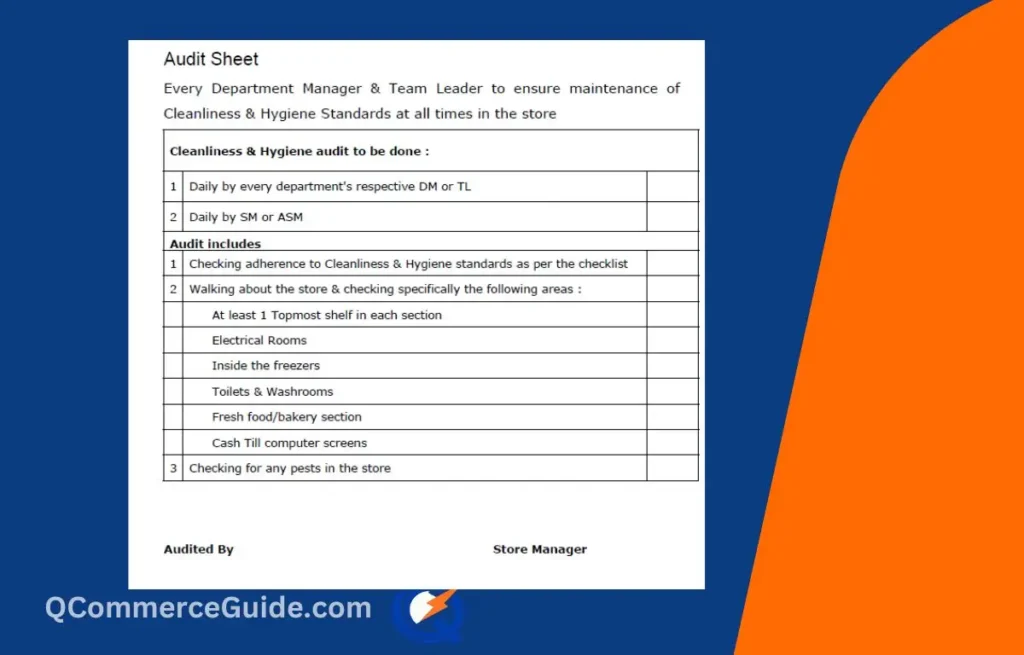
Recommended Hygiene Audit Routine
Opening Audit
Review:
- Store readiness
- Cleaning completion
- Storage condition
Mid-Shift Review
Verify:
- Waste accumulation
- Packing condition
- Inventory presentation
Closing Audit
Confirm:
- Cleanup completion
- Damage closure
- Corrective actions
This cycle helps prevent hygiene deterioration across operating hours.
Common Mistakes Teams Should Avoid
Many hygiene issues are process problems rather than cleaning problems.
Avoid:
Cleaning Only Before Visits
Operational discipline should remain consistent.
Ignoring Back-End Areas
Storage and dispatch areas usually deteriorate first.
Delayed Damage Removal
Damaged inventory affects productivity and appearance.
Weak Ownership
When everyone owns cleanliness, nobody owns execution.
Overcomplicated Checklists
Simple audits usually deliver better compliance.
KPIs to Monitor
Track a manageable set of metrics:
- Hygiene Compliance %
- Audit Closure Rate
- Repeat Issue Count
- Damage Incidents
- Store Readiness Score
- Packaging Complaint Trends
Use these indicators to identify patterns rather than measure activity alone.
Practical Implementation Plan
Week 1:
Create cleaning ownership.
Week 2:
Launch audit checklist.
Week 3:
Review recurring issues.
Week 4:
Track KPI improvements.
Start small and standardize gradually.
My Experience; During my early days at Big Bazaar, customer experience started with store cleanliness and readiness. A clean, well-organized store with fully stocked shelves and proper product displays created a positive first impression and encouraged customers to shop with confidence. This experience taught me that operational excellence begins before the first customer walks through the door.
Frequently Asked Questions
How often should dark stores perform cleaning audits?
Minimum daily reviews are recommended, with spot checks during operations.
Who owns hygiene in quick commerce stores?
Ownership should be shared across operations, inventory, leadership, and housekeeping teams.
Does hygiene impact customer experience?
Yes. Product quality, packaging condition, and order consistency are influenced by operational cleanliness.
How Clean Operations Improve Customer Experience
Customers may never see the inside of a dark store, but they experience every operational decision.
Clean storage, organized packing, and disciplined execution improve product quality, reduce complaints, and strengthen customer confidence.
In quick commerce, cleanliness is not a support activity—it is part of operational excellence.
Stores that maintain strong hygiene standards usually create better execution consistency and a stronger customer experience over time.