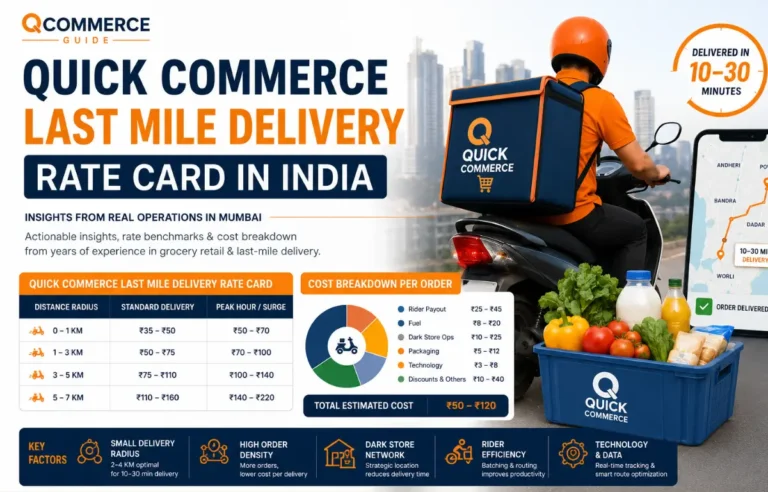
Quick commerce has transformed the Indian retail and logistics ecosystem. Companies like Blinkit, Zepto, and Swiggy Instamart are competing aggressively to deliver groceries and essentials within minutes.
Behind this fast delivery promise lies a highly optimized and expensive last-mile logistics network.
In this article, I will explain:
- Quick commerce delivery pricing
- Last mile delivery cost structure
- Dark store logistics economics
- Rider payout models
- Delivery cost optimization strategies
- Hyperlocal rate card benchmarks
During my tenure in retail and quick commerce operations, I observed that last-mile delivery is one of the biggest operational cost centers for q-commerce businesses.
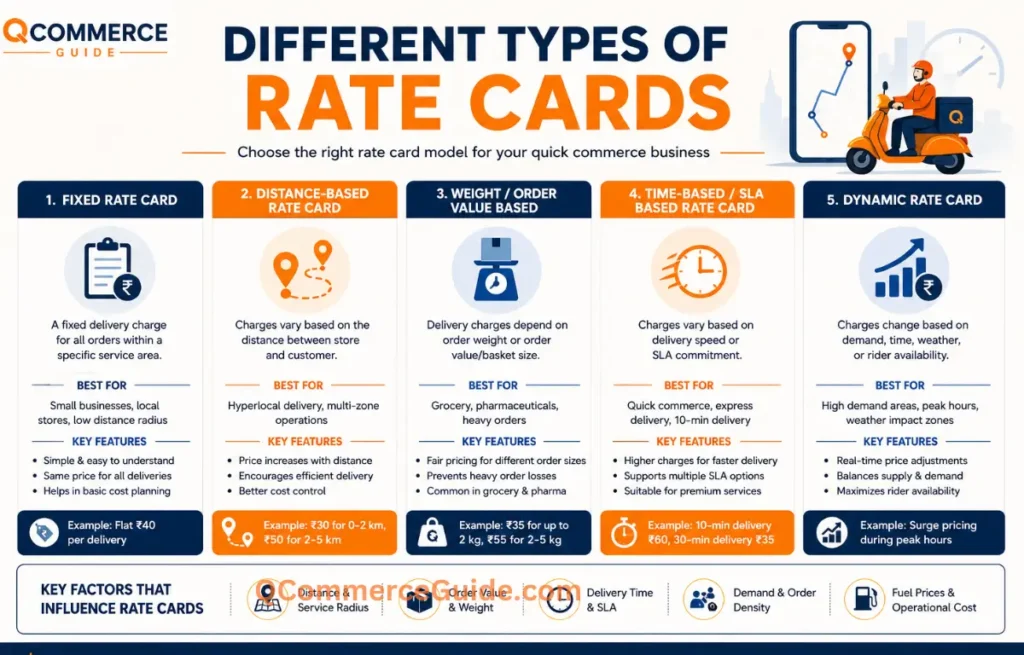
Key Take Aways; There aer 2 types of Rate Card;
- 1- Fixed Rate Card; Minimum Guarantee (MG)
- 2- CPO Rate Card; Per Order Based rate card
What is Quick Commerce Last Mile Delivery?
Quick commerce last mile delivery refers to delivering products from:
- Dark stores
- Micro fulfillment centers
- Local hubs
to customers within:
- 10 minutes
- 20 minutes
- 30 minutes
Unlike traditional e-commerce, quick commerce focuses on:
- Ultra-fast delivery
- Small basket orders
- High delivery frequency
- Hyperlocal operations
Quick Commerce Last Mile Delivery Rate (2026)
Standard Hyperlocal Delivery Pricing
Most quick commerce companies try to operate within a 2–4 KM delivery radius for operational efficiency.
| Distance Radius | Standard Cost | Peak Hour Cost |
|---|---|---|
| 0–1 KM | ₹35 – ₹50 | ₹50 – ₹70 |
| 1–3 KM | ₹50 – ₹75 | ₹70 – ₹100 |
| 3–5 KM | ₹75 – ₹110 | ₹100 – ₹140 |
| 5–7 KM | ₹110 – ₹160 | ₹140 – ₹220 |
As per my experience, once delivery radius crosses 5 KM, maintaining a 10-minute SLA becomes extremely difficult and expensive.
Quick Commerce Delivery Cost Breakdown
Average Cost Structure
| Cost Component | Estimated Cost Per Order |
|---|---|
| Rider Payout | ₹25 – ₹45 |
| Fuel Expense | ₹8 – ₹20 |
| Dark Store Operations | ₹10 – ₹25 |
| Packaging Cost | ₹5 – ₹12 |
| Technology Cost | ₹3 – ₹8 |
| Customer Discounts | ₹10 – ₹40 |
| Total Estimated Cost | ₹50 – ₹120 |
This cost varies based on:
- City tier
- Order density
- Basket size
- Rider utilization
- Traffic conditions
Rider Payout Model in Quick Commerce
Most quick commerce companies use a hybrid payout structure.
Typical Rider Earnings
| Component | Charges |
|---|---|
| Base Pay Per Order | ₹20 – ₹35 |
| Distance Incentive | ₹5 – ₹15 |
| Peak Bonus | ₹10 – ₹50 |
| Rain Incentive | ₹20 – ₹80 |
| Batch Delivery Bonus | Variable |
During festival seasons and peak demand hours, rider payouts increase significantly.
Dark Store Delivery Economics
Dark stores are the backbone of quick commerce logistics.
Dark Store Cost Drivers
- Store rent
- Inventory holding cost
- Picker salaries
- Electricity
- Technology systems
- Packaging material
- Delivery fleet management
In my career managing retail operations, inventory placement and dark store location strategy were critical factors in reducing delivery cost per order.
Quick Commerce Pricing Models
1. Free Delivery Model
Used for:
- Customer acquisition
- High competition markets
Platforms recover costs through:
- Higher product margins
- Advertising revenue
- Platform fees
2. Platform Fee Model
Many companies now charge:
- ₹5
- ₹10
- ₹15 platform fees
to improve unit economics.
3. Surge Pricing Model
Delivery charges increase during:
- Rain
- Festivals
- Peak demand
- Rider shortages
Key Factors Affecting Quick Commerce Delivery Cost
Delivery Radius
Smaller delivery radius improves:
- Faster fulfillment
- Rider productivity
- Lower fuel expense
Order Density
Higher order density reduces:
- Cost per delivery
- Rider idle time
Dense urban markets are far more profitable.
Basket Size
Low-value orders create profitability pressure because delivery cost remains fixed.
Traffic & City Infrastructure
Metro cities face:
- Congestion
- Parking issues
- Delayed fulfillment
which impacts SLA performance.
How Quick Commerce Companies Reduce Delivery Costs
Rider Batching
Multiple nearby orders are delivered together.
AI Route Optimization
Advanced routing systems reduce:
- Travel time
- Fuel usage
- Rider idle time
EV Fleet Adoption
Electric vehicles lower:
- Fuel cost
- Maintenance expense
Dark Store Expansion
More dark stores reduce average delivery distance.
Challenges in Quick Commerce Last Mile Logistics
Quick commerce companies face several operational challenges:
- High customer acquisition cost
- Rising rider payouts
- Fuel inflation
- Delivery SLA pressure
- Low-margin grocery business
- High return and cancellation rates
As per my experience, profitability becomes difficult when companies aggressively chase ultra-fast delivery without optimizing order density.
Future of Quick Commerce Logistics in India
The future of quick commerce will depend on:
- EV-based fleets
- Automation
- AI demand forecasting
- Smart dark store networks
- Micro-fulfillment technology
- Better inventory optimization
The industry is moving toward sustainable and operationally efficient delivery models instead of focusing only on speed.
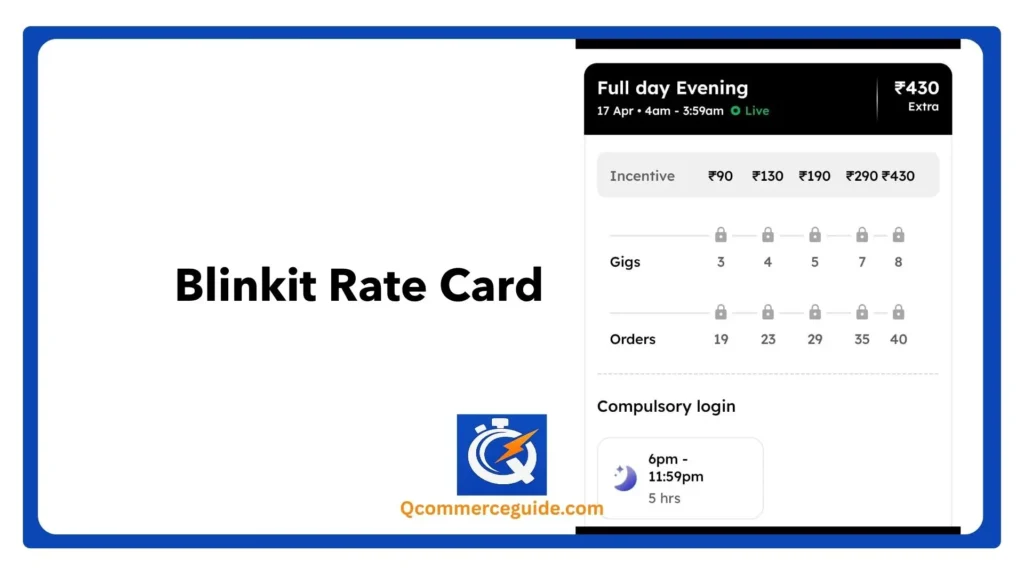
Blinkit Rate Card;
Below is a sample rate card of Blinkint, Source Blinkit website
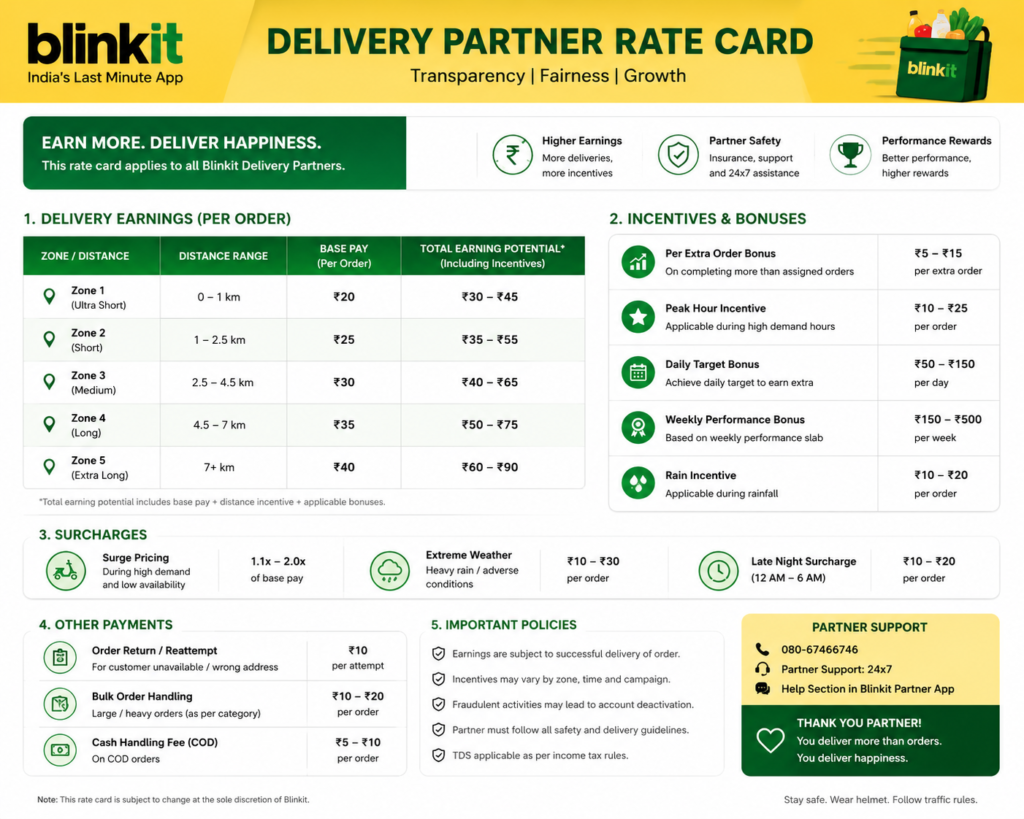
Blinkit Rate Card Screenshot
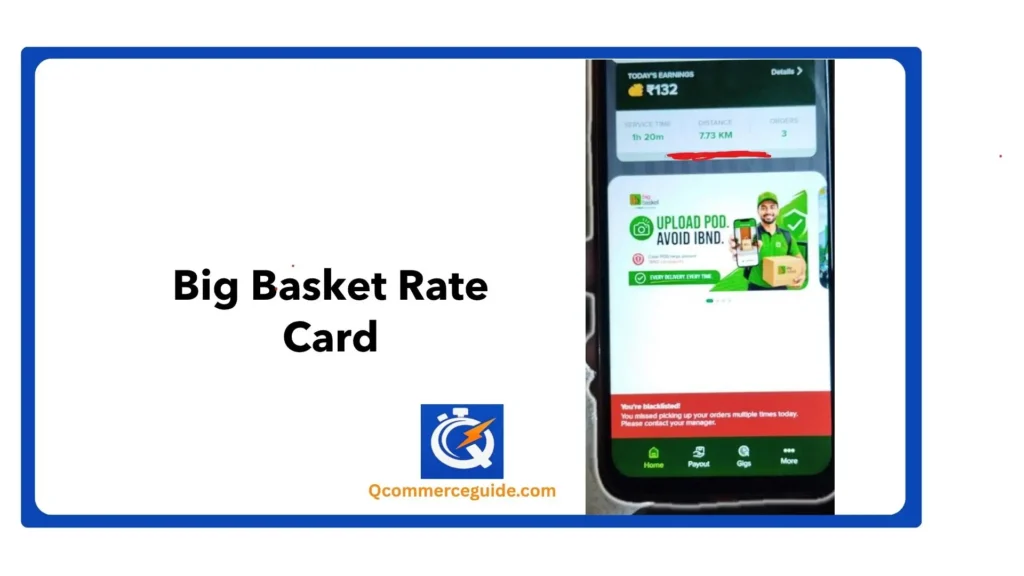
Big Basket Rate Card
Below is a sample rate card of Big Basket, Source Big Basket Website
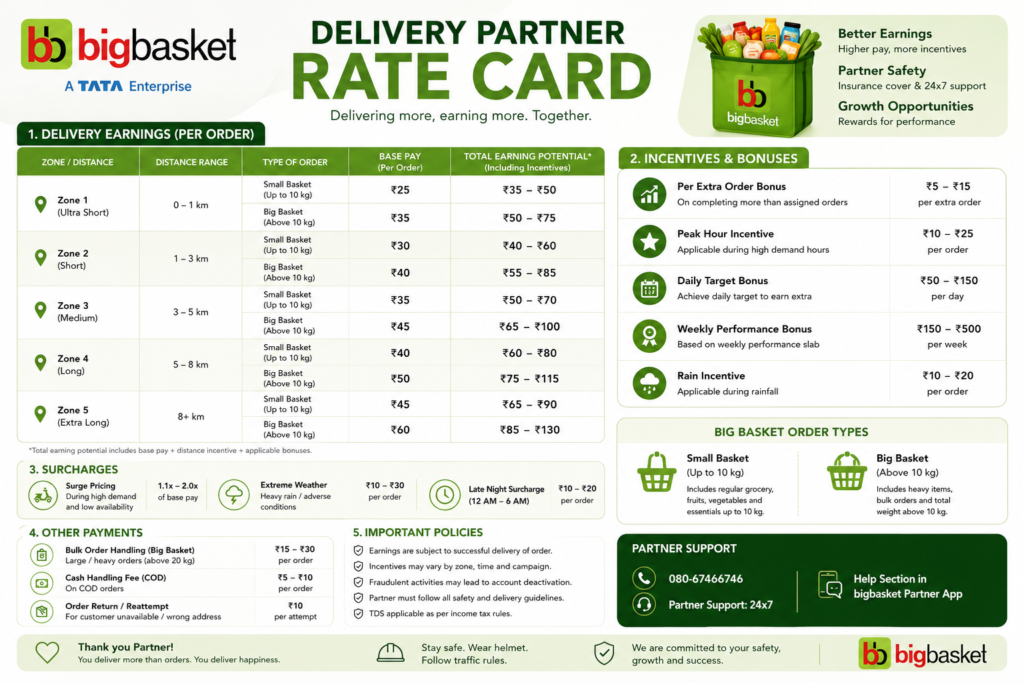
Screen shot of Big Basket rate card;
Final Thoughts
Quick commerce last mile delivery is one of the most complex and expensive logistics operations in modern retail.
Companies that successfully optimize:
- Delivery radius
- Rider utilization
- Dark store placement
- Inventory forecasting
- Order batching
can significantly improve profitability and customer experience.
During my tenure in retail and quick commerce operations, I found that operational discipline and delivery density are the real drivers of long-term success in quick commerce logistics.
1 thought on “Quick Commerce Last Mile Delivery Rate Card in India 2026”